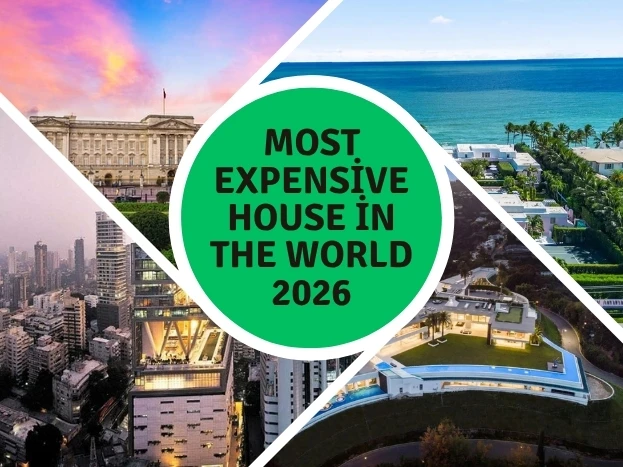
There’s a particular kind of silence that settles over the most expensive real estate markets in the world — not the silence of emptiness, but the kind that comes with extreme exclusivity. In 2026, the conversation around the world’s priciest homes has reached a new register. We’re no longer talking about sprawling Californian mansions or penthouse apartments in Midtown Manhattan as the ceiling of ambition. We’re talking about vertical cities rising above Mumbai, centuries-old villas on the French Riviera, and royal palaces that no private bidder could ever hope to acquire.
This guide takes you inside the most expensive houses in the world in 2026 — ranked, detailed, and examined not just for their price tags, but for what they represent about wealth, architecture, culture, and the evolving definition of home.
What Makes a Home the “Most Expensive” in the World?
Before diving into the list, it’s worth pausing on that question. Value in ultra-luxury real estate isn’t a simple calculation. It combines location prestige, architectural rarity, historical significance, materials used, available amenities, and — perhaps most importantly — the exclusivity of the opportunity itself. A home can be technically large and technically finished but still pale in comparison to a property that carries a century of royal heritage or sits on the most coveted street in Asia.
It also matters whether we’re talking about estimated current value or active listing price. Some properties on this list have never been and will never be for sale. Others are actively listed. Some sold years ago and set records that still stand. All of them, in their own way, define the upper boundary of what a residential property can be worth in the modern world.
With that in mind, here is a comprehensive look at the most expensive houses in the world in 2026.
1. Buckingham Palace, London — Estimated Value: $4.9 Billion
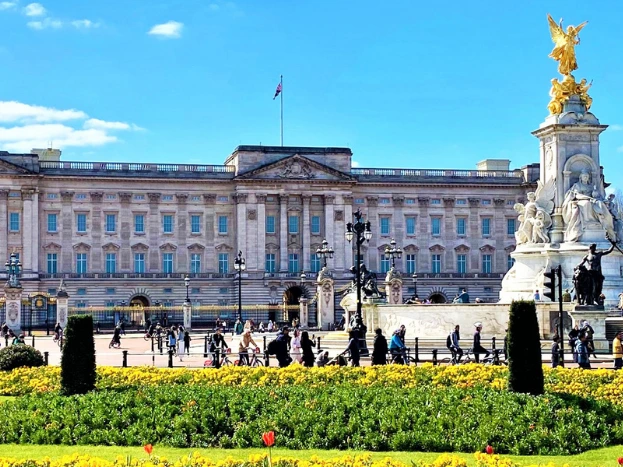
No private listing comes close to Buckingham Palace when measured by pure estimated value. Located in the heart of Westminster, London, this iconic residence serves as the official headquarters of the British monarchy and has been the working palace of the sovereign since Queen Victoria’s reign in the 19th century.
The numbers alone are staggering: 775 bedrooms, 78 bathrooms, 52 royal and guest rooms, 92 offices, and 19 state rooms used for official functions. The palace grounds stretch over 40 acres, with a private garden that is one of the largest in London. Converted to square footage, the total interior space approaches 828,000 square feet.
That said, Buckingham Palace is not privately owned in any conventional sense. It is held in trust for the nation, and its value — most commonly cited at $4.9 billion in 2026 — is a theoretical figure representing what it might fetch on an open market. It will never appear on Rightmove or Zillow. But in any discussion of the world’s most expensive residential properties, it sits unchallenged at the top simply because of its scale, location, and symbolic weight.
The palace is, in many ways, the baseline against which every other luxury residence is measured.
2. Antilia, Mumbai — Estimated Value: $2 Billion to $4.6 Billion
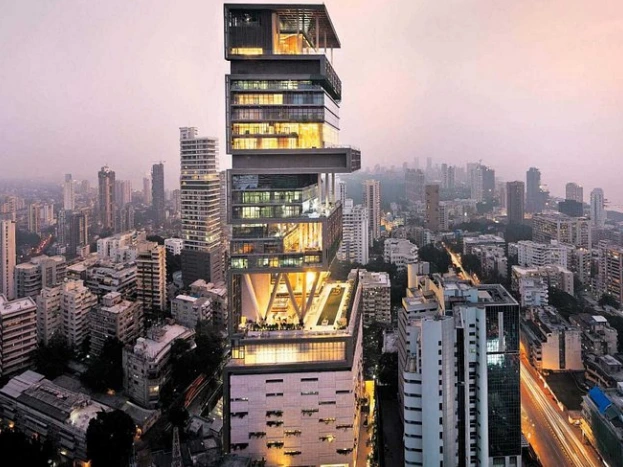
When it comes to the world’s most expensive privately owned home — meaning a property actually lived in by a family — Antilia in Mumbai stands alone. Built for Mukesh Ambani, chairman of Reliance Industries and one of the wealthiest individuals on the planet, this 27-story skyscraper on Altamount Road rewrote every assumption about what a residential building could look like.
Construction began in 2006 and was completed in 2010, though the Ambani family didn’t move in until late 2011, reportedly after extensive consultations with Vastu Shastra experts and 50 Hindu priests to ensure the spiritual alignment of the home. That detail alone tells you something about how Antilia was conceived — not as a trophy asset or an investment vehicle, but as a home in the deepest cultural sense.
The Architecture
Antilia was designed by Chicago-based architecture firm Perkins & Will, with interiors by Los Angeles-based Hirsch Bedner Associates — the same team behind the Mandarin Oriental, New York. The building rises to 173 meters (568 feet), a height that would typically support a 60-story conventional structure. The reason the floor count stops at 27 is simple: each floor has the ceiling height of roughly two standard stories, creating spaces that feel genuinely palatial rather than squeezed.
Every single floor carries a different design theme. No two rooms share the same materials, color palette, or motif. The architectural language draws on traditional Indian iconography — the lotus flower, the sun — rendered through rare materials: mother-of-pearl, crystal, marble, and custom-fabricated glass.
The building was engineered to withstand an earthquake of magnitude 8 on the Richter scale. That structural ambition is matched by the sophistication of the building systems throughout.
Inside the Ambani Residence
What Antilia offers its residents goes beyond anything typically found in luxury residential real estate.
A Six-Floor Garage for 168 Cars: The first six floors of the building are dedicated entirely to vehicle storage, with capacity for 168 automobiles. The seventh floor houses a dedicated car service station — essentially a private mechanic’s workshop for the family’s fleet.
Three Rooftop Helipads: Air travel isn’t a special occasion at Antilia; it’s a standard mode of transport. Three helipads sit atop the structure, each capable of receiving a different aircraft.
A 50-Seat Private Cinema: Entertainment at this scale isn’t streamed on a television. The home includes a full private cinema with tiered seating for 50 guests — the kind of screening room that most commercial theatres would envy.
The Snow Room: Perhaps the single most talked-about feature of Antilia is a room whose walls produce artificial snowfall. In a city where temperatures routinely push past 35°C (95°F), this is less a novelty and more a statement — an entirely engineered climate within the walls of the building, pulling the occupant momentarily to another world.
Hanging Gardens Inspired by Babylon: Three floors of the building are given over to terraced gardens, drawing explicit inspiration from one of the ancient world’s great wonders. These aren’t decorative flourishes; they function as thermal buffers, helping regulate temperature throughout the building and reducing the mechanical cooling load.
A Private Temple: Spiritual life is built into the structure. A dedicated temple for family prayer and religious ceremonies occupies its own dedicated space within the home.
Nine High-Speed Elevators: Movement through 27 floors of a private home requires its own infrastructure. Nine elevators — separately designated for family, guests, and staff — manage internal circulation across the building.
600 Full-Time Staff: The property employs more than 600 people to maintain daily operations, covering everything from security and maintenance to hospitality and technical management.
On the sustainability front, Antilia has earned the informal title of the “Green Tower of Mumbai.” Solar panels meet a significant portion of the building’s energy needs, and the natural ventilation system — combined with the hanging gardens — reduces reliance on conventional air conditioning.
The Ambani family — Mukesh, his wife Nita, their sons Akash and Anant, daughter-in-law Shloka Mehta, and grandchildren — occupy the private residential floors at the top of the building. Everything below is infrastructure in service of that family’s daily life.
When analysts debate whether Antilia is worth $2 billion or closer to $4.6 billion (its more recently revised estimated value factoring in land appreciation), the honest answer is that it may be beyond conventional valuation. There is no comparable property to benchmark it against.
3. Villa Les Cèdres, Saint-Jean-Cap-Ferrat — Estimated Value: $500 Million
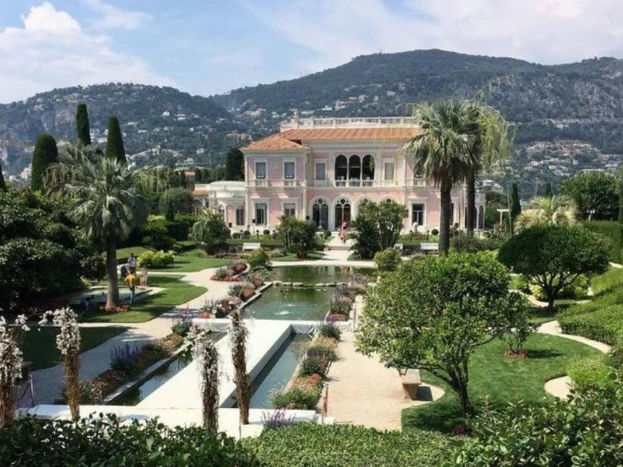
If Antilia is the most modern home on this list, Villa Les Cèdres is the most ancient in character — and that contrast says everything about the different ways extreme wealth expresses itself in architecture.
Built originally in the 1830s, Villa Les Cèdres was acquired by Belgium’s King Leopold II in 1904 and became a gathering point for European aristocracy across several generations. The villa’s name refers to the ancient cedar trees that still shade its grounds. Today it belongs to the Safra family — widow of Lebanese banker Edmond Safra — and has been estimated at around $500 million in value.
The estate features 14 bedrooms, a grand library housing rare manuscripts, and what many consider to be one of Europe’s finest private botanical gardens, with plant specimens collected across more than a century. The surrounding property extends across beautifully maintained grounds with direct views over the Mediterranean.
Properties like Villa Les Cèdres don’t sell on price alone. They sell on provenance. Whoever eventually buys this villa isn’t acquiring a house; they’re acquiring a chapter of European history and a permanent standing in one of the world’s most exclusive communities.
4. Villa La Leopolda, Saint-Jean-Cap-Ferrat — Estimated Value: $450 Million
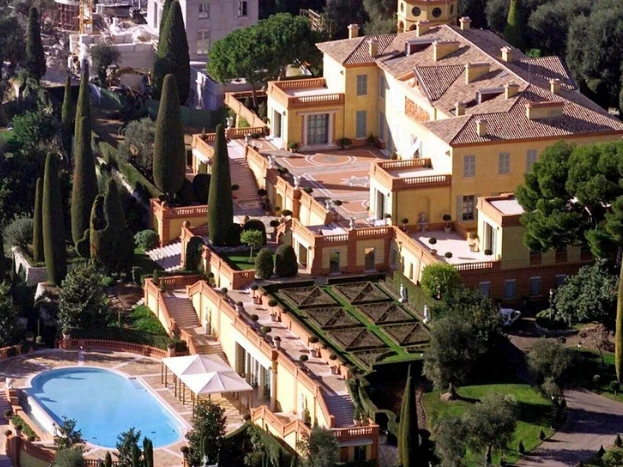
A short distance from Villa Les Cèdres, another remarkable property carries the name of the same Belgian king. Villa La Leopolda was originally built in 1902 — commissioned by King Leopold II as a private retreat for his companion — and has passed through some of the most notable hands in European wealth over the 20th century.
Lily Safra, who also owns Les Cèdres, formerly held this property, which later passed through other notable owners. The villa’s estimated value sits around $450 million, anchored by its 14 bedrooms, iconic Mediterranean Revival architecture, and gardens that descend through terraces to the sea.
The French Riviera is extraordinary real estate territory, and these two adjacent trophy properties on the same coastline represent a concentration of historical wealth — and architectural beauty — that is genuinely hard to find anywhere else in the world.
5. The One, Bel-Air, Los Angeles — Listed at $500 Million (Sold for ~$141 Million)
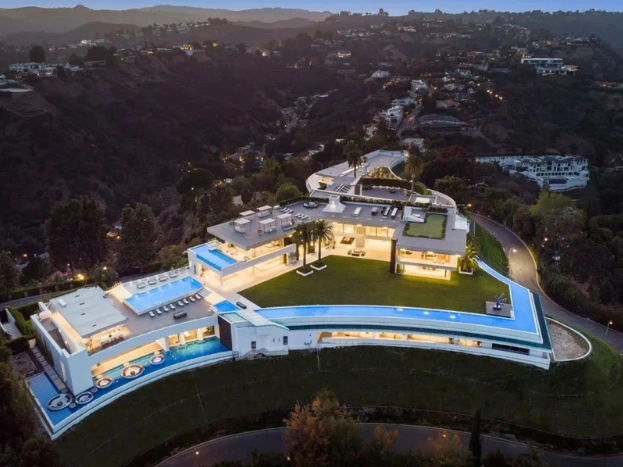
Few properties in recent memory generated as much media coverage as “The One,” a mega-mansion developed by Nile Niami in the hills above Bel-Air, Los Angeles. It was listed at $500 million, which would have made it the most expensive residential sale in U.S. history. Reality intervened.
After years of financing troubles, legal proceedings, and forced receivership, The One went to auction in 2022 and sold for approximately $141 million — still a staggering figure, but a fraction of its headline price.
The house itself is extraordinary by any objective measure: roughly 105,000 square feet of living space including a swimming pool, a bowling alley, a boxing gym, a discotheque, a home theatre, a private nightclub, and a rooftop putting green. It is, in architectural terms, less a home than a private resort complex that happens to be privately owned.
The story of The One is also a lesson in the gap between ambition and market reality, even at the extreme end of luxury real estate. Not every nine-figure listing becomes a nine-figure sale.
6. Resnick Ranch, Aspen, Colorado — Listed at $300 Million
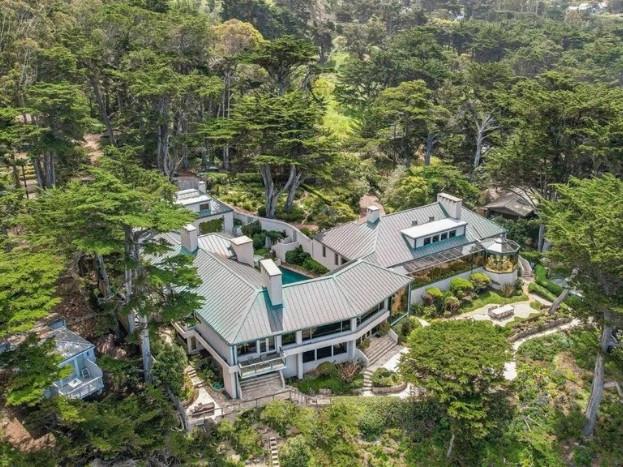
In Aspen, where the mountain air is thin and the real estate prices are anything but, billionaires Stewart and Lynda Resnick have placed their 75-acre ranch on the market for $300 million — one of the highest residential listing prices currently active in the United States as of 2026.
The ranch represents a particular strand of ultra-luxury real estate: the trophy ranch, where the land itself carries the bulk of the value. Aspen’s combination of natural beauty, elite social culture, and comparative scarcity of developable land makes properties at this scale genuinely rare.
Whether the Resnick ranch achieves its asking price or sells at a discount (as The One did) remains to be seen. But its presence on the market reflects the broader confidence that characterizes the ultra-luxury sector heading into 2026: sellers believe the buyers are out there, and they’re willing to wait.
7. Apex Duplex, Central Park Tower, New York — Listed at $128 Million
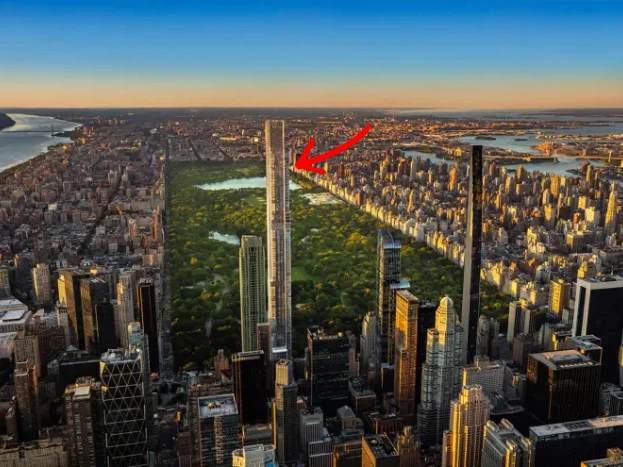
Not all of the world’s most expensive homes are sprawling estates with acres of grounds. The Apex Duplex at Central Park Tower occupies the 127th and 128th floors of what is the tallest residential building in the world, and it offers a completely different kind of luxury: verticality.
Floor-to-ceiling windows frame 270-degree views of Manhattan — Central Park stretching northward, the glittering geometry of Midtown below, and on clear days, the horizon reaching well beyond the city’s edge. Ceilings soar to 14 feet in the main living areas. The duplex arrangement creates natural separation between entertainment and private spaces.
At $128 million, this is a different kind of expensive than a Bel-Air mega-mansion or a Riviera villa. You’re buying the sky, the view, and the address. In New York real estate terms, that combination commands a premium that has no ceiling — quite literally.
8. Palm Beach Oceanfront Estate, Florida — Listed at Over $200 Million
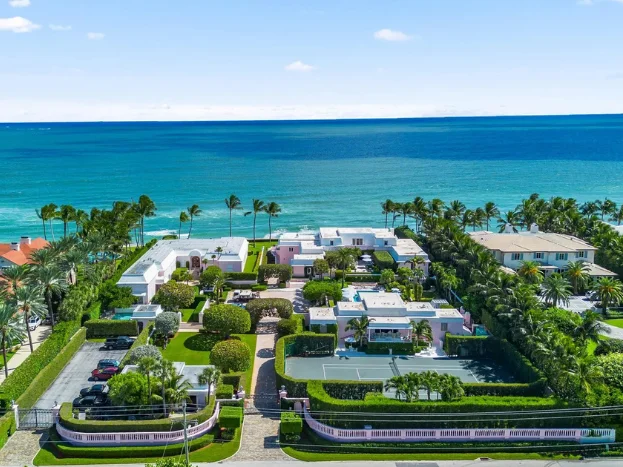
South Florida has quietly become one of the world’s most significant luxury real estate markets, driven by tax advantages, climate, and the migration of financial industry wealth from the Northeast. In Palm Beach, a Mediterranean Revival mansion — built in 2005 on a site once owned by Gucci chairman Aldo Gucci — was listed in late 2025 at over $200 million, making it South Florida’s most expensive residential listing.
The property features 230 feet of direct ocean frontage, a six-bedroom main house, a guest cottage, a 65-foot pool, a rooftop patio, a beachfront cabana, and garaging for six vehicles. The late Gucci connection adds historical texture that pure new-build construction simply can’t replicate.
This listing, alongside the nearby Naples sale that closed at $225 million in 2025 (the highest residential sale in U.S. history at the time), signals that Florida is no longer simply a second-home market for the ultra-wealthy. It has become a primary destination.
The State of the Ultra-Luxury Market in 2026
Stepping back from individual properties, a broader picture emerges of where the ultra-luxury residential market stands as 2026 unfolds.
The outlook, according to industry observers, is cautiously optimistic. The total asking price of the 25 most expensive homes currently listed for sale globally exceeds $4.1 billion, with an average asking price of approximately $164 million per property. To qualify for this rarefied list at all, a property needs to carry a nine-figure price tag.
Two forces are primarily driving demand at this level. The first is inherited wealth — generational fortunes that are transferring and concentrating, creating a new cohort of buyers with both the capital and the cultural aspiration to acquire landmark properties. The second is international buyers, particularly from Asia and the Middle East, who are entering established luxury markets in Europe and the United States with a frequency and purchasing power that was not present a decade ago.
The 2025 high-water mark — a $225 million sale in Naples, Florida — set a benchmark that the market will test again in 2026. Whether that ceiling gets broken depends on a handful of properties that are positioned close to or above that number. The suspense is part of what makes this market fascinating to follow.
What These Homes Tell Us About Wealth and Architecture
Looking across this list, a few themes emerge that say something meaningful about how extreme wealth interacts with the built environment in the mid-2020s.
Personalization Over Standardization. The most valuable homes in the world are not the products of speculative development. They are deeply personal projects — expressions of a specific owner’s cultural values, aesthetic convictions, and lifestyle requirements. Antilia’s Vastu Shastra compliance, the Resnick ranch’s landscape, Villa Les Cèdres’ botanical legacy — each reflects an individual or family’s vision of what a home should be.
Sustainability Is No Longer Optional. Even at the extreme luxury tier, environmental considerations have entered the design conversation. Antilia’s solar energy system and passive ventilation, the organic landscaping philosophies emerging in European estates — these aren’t marketing add-ons. They reflect a genuine shift in how even the wealthiest buyers think about long-term resource management.
Location Remains the Irreplaceable Variable. Buckingham Palace could theoretically be relocated nowhere. Antilia’s value is inseparable from its address on Altamount Road — one of the world’s most expensive streets. Villa La Leopolda without the French Riviera is simply a large house. The land, the setting, the neighborhood: these factors define value in a way that money alone cannot replicate.
Heritage Commands a Premium. A property with a documented history — royal ownership, artistic association, architectural legacy — consistently commands prices beyond what its physical attributes alone could justify. Buyers at this level aren’t simply acquiring real estate; they’re acquiring narrative, identity, and entry into a historical continuum.
Privacy Is Its Own Luxury. Across nearly every property on this list, one feature recurs: inaccessibility to the outside world. Whether it’s Antilia’s controlled-access tower in the heart of a city of 20 million people, or the gated Riviera estates visible only from the sea, ultra-luxury in 2026 means the freedom to be entirely invisible when you choose to be.
Comparing the Giants: A Quick Reference
| Property | Location | Est. Value (2026) | Owner |
|---|---|---|---|
| Buckingham Palace | London, UK | $4.9 billion | British Crown |
| Antilia | Mumbai, India | $2–$4.6 billion | Mukesh Ambani |
| Villa Les Cèdres | French Riviera | ~$500 million | Safra Family |
| The One | Bel-Air, CA | Listed $500M / Sold $141M | Private |
| Villa La Leopolda | French Riviera | ~$450 million | Private |
| Resnick Ranch | Aspen, CO | Listed $300 million | Resnick Family |
| Apex Duplex, CPT | New York, NY | Listed $128 million | Private |
| Palm Beach Estate | Palm Beach, FL | Listed $200M+ | Private |
Final Thoughts: The Home as Monument
The world’s most expensive houses in 2026 are more than real estate. They are monuments — to wealth, yes, but also to vision, craft, cultural identity, and the very human desire to build something permanent in an impermanent world.
Antilia stands as testament to India’s economic rise and one family’s determination to live on its own terms in the middle of one of the world’s most frenetic cities. Villa Les Cèdres speaks to a Europe where aristocratic aesthetics still command genuine market premiums. The Apex Duplex at Central Park Tower makes a case for the vertical sublime — for the idea that height itself can be a form of luxury.
What ties these properties together isn’t their price. It’s the conviction behind each one — the belief that a home can be more than shelter, more than investment, more than status symbol. At their best, the world’s most expensive houses are the places where architecture, money, culture, and time come together to create something that outlasts all of them.
That, in the end, is why we keep looking.
What is the most expensive house in the world in 2026?
Buckingham Palace in London holds the top spot with an estimated value of $4.9 billion. However, since it is not privately owned, the most expensive privately owned residence is Antilia in Mumbai, India — built for billionaire Mukesh Ambani and valued between $2 billion and $4.6 billion.
Who owns the most expensive private house in the world?
Mukesh Ambani, Chairman and Managing Director of Reliance Industries, owns Antilia — widely recognized as the world’s most expensive privately owned home. He lives there with his wife Nita Ambani, their sons Akash and Anant, and their families.
Where is Antilia located and why is it so expensive?
Antilia is located at Altamount Road, Cumballa Hill, South Mumbai — often called “Billionaires’ Row,” one of the most expensive addresses in Asia. Its value comes from its unique 27-story design, 400,000 sq ft of space, world-class amenities (three helipads, a snow room, a 50-seat cinema, six floors of parking for 168 cars), and the sheer cost of the materials and engineering involved.
How many floors does Antilia have?
Antilia has 27 floors, but because each floor has the ceiling height of roughly two standard stories, the building reaches 173 meters (568 feet) — equivalent in height to a conventional 60-story skyscraper.
What is the most expensive house ever sold in the United States?
As of 2026, the highest recorded residential sale in the U.S. is a waterfront estate in Naples, Florida, which sold for $225 million in 2025. The most expensive active listing is a 75-acre ranch in Aspen, Colorado, owned by Stewart and Lynda Resnick and listed at $300 million.
What is the most expensive house currently for sale in the world?
As of 2026, the Resnick Ranch in Aspen, Colorado is listed at $300 million, making it one of the highest active residential listings globally. In South Florida, a Palm Beach oceanfront estate is listed at over $200 million.
Is Buckingham Palace the biggest house in the world?
Buckingham Palace is one of the largest residential palaces in the world, with approximately 828,000 square feet of interior space. However, the absolute largest residential structure by floor area is Istana Nurul Iman in Brunei, the official residence of the Sultan, which covers over 2.15 million square feet.
What amenities does the world’s most expensive private home have?
Antilia, the world’s most expensive private residence, features three rooftop helipads, a six-floor garage for 168 cars, a 50-seat private cinema, a snow room, three floors of hanging gardens, a grand ballroom, a private temple, a spa, yoga studio, salon, ice cream parlor, nine high-speed elevators, and over 600 full-time staff to manage daily operations.
How much does it cost to maintain the most expensive house in the world?
Antilia is estimated to cost between $10 million and $20 million per year to maintain, accounting for the salaries of 600+ full-time staff, utility costs, security infrastructure, and upkeep of the building’s advanced mechanical systems. Exact figures have never been officially disclosed.
What are the most expensive neighborhoods for luxury homes in the world?
The world’s top ultra-luxury residential addresses include Altamount Road in Mumbai, the French Riviera coastline (particularly Saint-Jean-Cap-Ferrat), Bel-Air and Beverly Hills in Los Angeles, Palm Beach in Florida, Westminster in London, and the upper floors of super-tall towers in Manhattan and Monaco.